
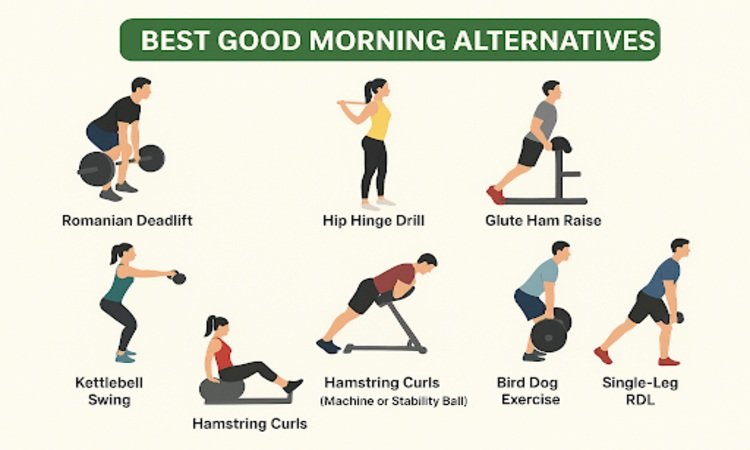

The Good Morning exercise is a powerful movement known for targeting the hamstrings, glutes, and lower back—muscles that form the foundation of a strong posterior chain. However, despite its benefits, this exercise isn’t suitable for everyone. Beginners may struggle with technique, people with lower-back sensitivity may find the position uncomfortable, and even experienced lifters sometimes look for ways to train the same muscles with less spinal stress. Fortunately, there are several effective alternatives that offer similar benefits while providing more control, safety, and flexibility.
In this blog, we’ll explore the best alternatives to the Good Morning exercise, understand why they are useful, learn how to choose the right one, and review how they can be incorporated into your fitness routine.
Why Look for Alternatives to the Good Morning Exercise?
The Good Morning requires you to bend forward with a loaded barbell resting on your upper back. Although the movement strengthens essential muscles, it’s also one of the most technically demanding hip-hinge exercises. Many people experience difficulty maintaining proper form, especially when mobility or core stability is lacking.
One of the biggest concerns is lower-back strain. Even with good form, the position naturally places pressure on the lumbar spine. For individuals just beginning strength training, those recovering from minor injuries, or anyone dealing with tight hamstrings or hip stiffness, this exercise may feel risky or uncomfortable.
Additionally, the Good Morning may simply not fit everyone’s training goals. Some lifters prefer dynamic movements, while others want isolated muscle work or lighter loading options. Alternatives give you the freedom to work the same muscles in safer or more adaptable ways.
Top Good Morning Exercise Alternatives
There are many exercises that target the posterior chain, but the ones below are the most effective substitutes for the Good Morning. Each one mirrors the hip-hinge pattern or engages similar muscle groups, making them reliable and safe alternatives.
1. Romanian Deadlift (RDL)
Widely considered the closest alternative to the Good Morning, the Romanian Deadlift strengthens the glutes and hamstrings through the same hip-hinge pattern but with far less loading on the spine. Instead of placing weight on your back, you hold it in your hands, keeping the load closer to your hips and center of gravity.
This exercise improves posture, builds posterior strength, enhances flexibility, and carries over into daily activities and athletic movements. Whether you use dumbbells or a barbell, the controlled descent and stretch on the hamstrings make it highly effective.
2. Hip Hinge Drill
For beginners who want to learn proper mechanics before lifting heavy, the hip hinge drill is essential. Using a dowel or broomstick placed along the spine, you learn how to bend at the hips without rounding the back. This reinforces correct alignment and teaches the body how to hinge safely—skills required not only for Good Mornings but for deadlifts, kettlebell swings, and back extensions.
It’s simple, low-impact, and one of the safest ways to strengthen your movement foundation.
3. Glute Ham Raise
The glute ham raise is a powerful exercise that isolates the hamstrings and trains them through both knee flexion and hip extension. It’s challenging, highly effective, and often used by athletes to prevent injuries and improve explosive performance.
Since it requires no spinal loading, it’s a great choice for individuals who want to develop their posterior chain safely. The movement demands controlled lowering and rising, which builds incredible strength and stability.
4. Kettlebell Swing
If you’re looking for a more dynamic alternative, the kettlebell swing provides an explosive hip-hinge workout that targets the glutes, hamstrings, and lower back while improving cardiovascular fitness. Unlike the slow and controlled Good Morning, the kettlebell swing teaches you how to generate power and maintain stability in rapid movements.
This exercise improves athleticism, burns calories, and strengthens the posterior chain—all without placing a barbell on your back.
5. Back Extension
Back extensions, also known as hyperextensions, allow you to train your spinal erectors, glutes, and hamstrings in a safe and controlled way. Performed on a back extension bench, the movement involves bending forward and lifting your torso while maintaining alignment.
Because you can adjust the angle, the level of difficulty, and the amount of added weight, this exercise is extremely versatile. It’s especially beneficial for strengthening the lower back and preparing your body for heavier lifts.
6. Trap Bar Deadlift
The trap bar deadlift is another excellent alternative because it reduces the shear stress commonly placed on the spine during barbell movements. The neutral grip and positioning put your body in a more upright stance, making the lift safer and more accessible.
Even though it’s safer, it’s still a powerful strength-building exercise that engages the legs, glutes, hamstrings, and back. Anyone wanting a heavy compound movement without the risks of the Good Morning will benefit from this option.
7. Cable Pull-Through
Cable pull-throughs closely mimic the hip-hinge movement and focus heavily on glute activation. Because the resistance comes from behind you, the exercise forces your glutes and hamstrings to work harder, helping you build strength and stability without loading your spine.
It’s excellent for both beginners and advanced lifters who want to develop strong posterior muscles in a controlled environment.
8. Hamstring Curls
Whether you use a machine, resistance band, or stability ball, hamstring curls isolate the hamstrings and help strengthen them without involving your lower back at all. This makes them ideal for people dealing with back discomfort or those aiming to build muscle in a targeted way.
Stronger hamstrings improve overall leg balance, athletic performance, and protection against injuries—making curls a great supporting exercise.
9. Single-Leg Romanian Deadlift
The single-leg RDL enhances balance, stability, and unilateral strength. By working one leg at a time, you correct muscle imbalances and reduce overreliance on one side of the body. This exercise requires lighter weights but challenges your coordination and core strength significantly.
It provides a deep stretch and strong contraction in the hamstrings, delivering great results with minimal load.
How to Choose the Right Alternative
Selecting the best substitute depends on your fitness level, goals, and comfort. If you’re new to training, start with hip hinge drills, back extensions, or hamstring curls. Intermediate lifters may prefer RDLs, cable pull-throughs, or kettlebell swings. For advanced individuals, trap bar deadlifts and glute ham raises offer powerful strength development.
Consider what equipment you have available and how your body feels. The key is choosing exercises that help you maintain proper form, avoid discomfort, and progress steadily.
Final Thoughts
The Good Morning exercise is effective, but it’s not the only way to strengthen your posterior chain. The alternatives above offer safer, more controlled, and equally powerful ways to train your hamstrings, glutes, and lower back—without putting unnecessary pressure on your spine. Whether you’re just starting out or looking to expand your routine, these exercises will help you build strength, improve stability, and support long-term fitness.


